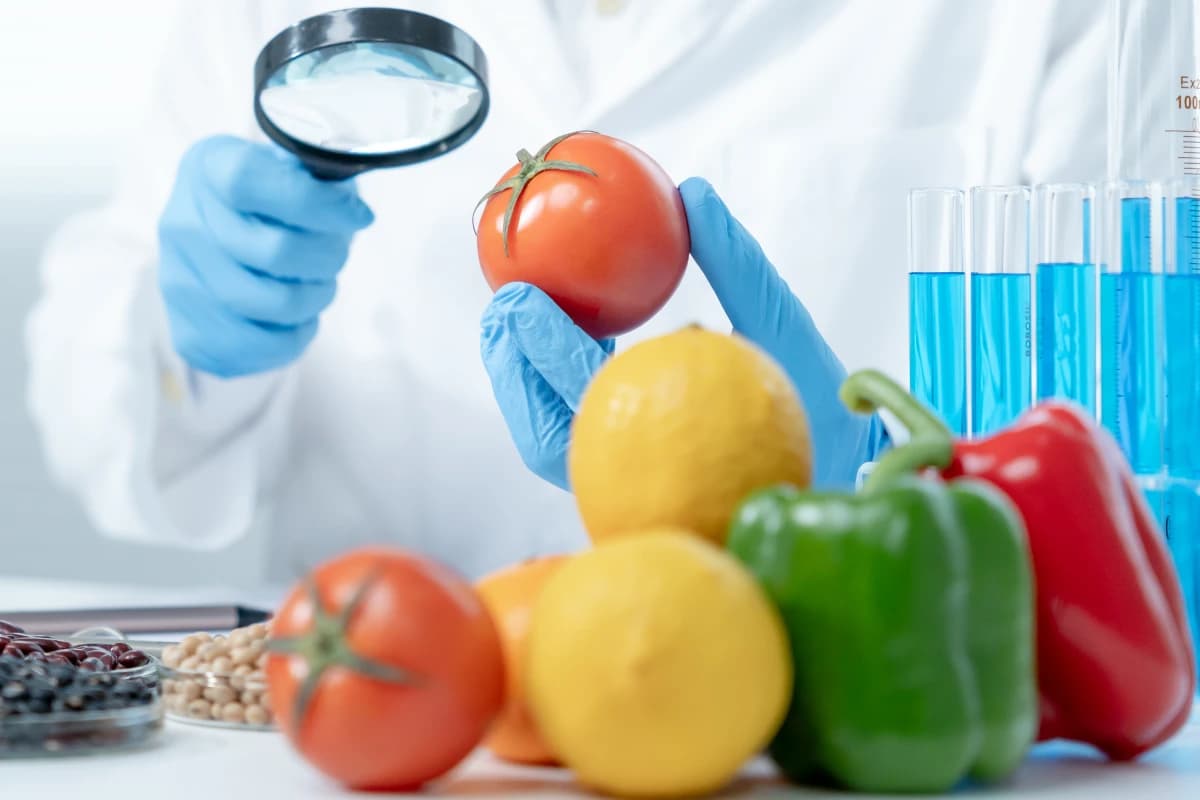
Expert Support for All Sectors
The quality of food is fundamentally determined by the quality of the plant and animal raw materials used in its production. This is primarily influenced by the environmental conditions of the production site. Our laboratory provides a comprehensive picture for the following sectors:
Food Manufacturers
Raw material analytics, in-process control, and final product qualification for the food industry.
Retail Chains
Product inspection, shelf-life, and food safety compliance for wholesale and retail units.
Restaurants & Hospitality
Microbiological control and hygiene condition assessment of restaurants and restaurant chains.
Private Individuals
Consumer food testing and nutritional value checks.
Operation of food safety monitoring systems and continuous microbiological control.
Investigation of food-related risks: identification of chemical and physical contaminants.
Comprehensive compliance testing according to domestic and EU food law (HACCP) regulations.
Our Testing
Our accredited laboratory performs comprehensive sampling and analytical testing in the following categories in accordance with current standards.
Accredited Sampling and Testing
Accredited Sampling and Testing
Sampling is the first step in quality control. Proper sampling of food is essential for obtaining accurate and reliable results according to ISO and HACCP standards.
- On-site sampling
- Surface wet swab hygiene sampling
- Transport in compliance with appropriate storage regulations (refrigerated, protected from light)
Microbiological Tests
Microbiological Tests
Microbiological testing to guarantee food safety, carried out in collaboration with a contracted service laboratory.
- Alicyclobacillus acidoterrestris
- Anaerobic mesophilic spore count
- Bacillus cereus
- Clostridium botulinum toxin
- Clostridium perfringens
- Coliform count
- Yeast and mold count
- Presence of Enterobacteriaceae
- Enterobacteriaceae count
- Enterococcus faecalis count
- Enterococcus count
- Presence of Escherichia coli
- Escherichia coli count
- Presence of coagulase-positive staphylococci
- Lactobacillus
- Presence of Listeria monocytogenes
- Listeria monocytogenes count
- Mesophilic lactic acid bacteria count
- Mold count
- Pseudomonas aeruginosa
- Presence of Salmonella spp.
- Presence of Staphylococcus aureus
- Staphylococcus aureus count
- Somatic cell count
- Sulfite-reducing clostridium count
- Colony count at 22 °C
- Colony count at 37 °C
Chemical and Physical Tests
Chemical and Physical Tests
Accurate determination of food composition and physical characteristics.
- Alcohols
- Antioxidants (BHA, BHT)
- Sugar alcohols
- Sugars
- Sweeteners
- Dietary fiber
- Protein
- Ash
- Hydroxyproline (connective tissue protein)
- Sand
- pH value
- Sulfur dioxide
- Table salt (sodium chloride)
- Moisture/dry matter
- Peroxide value
- Acidity
- Acid value
- Colorants
- Preservatives
- Water activity
- Fat
Allergen Testing
Allergen Testing
Detection of common food allergens and intolerance-causing substances.
- Peanuts
- Gluten/gliadin
- Casein
- Lactose
- Almonds
- Hazelnuts
- Mustard
- Sesame
- Soy
- Milk
- Eggs
Chemical Contaminants
Chemical Contaminants
Laboratory analysis of environmental and technological contaminants.
- Veterinary drug residues
- Dioxin derivatives
- Hydroxymethylfurfural (HMF)
- Mycotoxins (aflatoxins, ochratoxin-A, DON, T-2, HT-2, F-2)
- MOSH/MOAH
- Nitrates, nitrites
- Pesticide residues (>600 active substances)
- Perchlorate
- Polycyclic aromatic hydrocarbons (PAHs)
- Polychlorinated biphenyls (PCBs)
- Tetrahydrocannabinol (THC)
- Toxic metals (Pb, Hg, Cd, As, Sn, etc.)
Vitamin-enriched Preparations
Vitamin-enriched Preparations
Quantitative determination of fat- and water-soluble vitamins.
- Vitamin A (retinol)
- Beta-carotene (provitamin A)
- Vitamin D (cholecalciferol, ergocalciferol)
- Vitamin E (alpha-tocopherol)
- Vitamin B1 (thiamine)
- Vitamin B2 (riboflavin-5-phosphate)
- Vitamin B3 (niacin and niacinamide)
- Vitamin B5 (pantothenic acid)
- Vitamin B6 (pyridoxine)
- Vitamin B7 (biotin)
- Vitamin B9 (folic acid)
Additional Tests
Additional Tests
Comprehensive assessments for the qualification of food and feed products.
- Nutritional value analysis (abbreviated, extended – according to EU Regulation 1169/2011)
- 7-point nutritional value analysis (A) – fat, saturated fatty acids, protein, sugar, salt (Na-based), moisture, ash content, carbohydrate calculation, energy calculation (kJ/100g, kcal/100g) – according to EU Regulation 1169/2011
- 7-point nutritional value analysis (B) – fat, saturated fatty acids, protein, moisture and ash content, carbohydrate calculation, sugar (HPLC-glucose, fructose, sucrose, lactose), salt (Na-based), energy calculation (kJ/100g, kcal/100g) – according to EU Regulation 1169/2011
- 8-point nutritional value analysis (A) – fat, saturated fatty acids (GC), protein, moisture and ash content, carbohydrate calculation, sugar, salt (Na-based), dietary fibre content, energy content calculation (kJ/100g, kcal/100g) – according to EU Regulation 1169/2011
- 8-point nutritional value analysis (B) – fat, saturated fatty acids (GC), protein, moisture and ash content, carbohydrate calculation, sugar, salt (Na-based), dietary fibre content, acidity, energy content calculation (kJ/100g, kcal/100g) – according to EU Regulation 1169/2011
- 8-point nutritional value analysis (C) – fat, saturated fatty acids (GC), protein, carbohydrates, sugar (HPLC-glucose, fructose, sucrose, lactose), salt (Na-based), dietary fibre content, moisture and ash content, carbohydrate calculation, energy content calculation (kJ/100g, kcal/100g) – according to EU Regulation 1169/2011
- Feed testing according to the methods listed below
- Crude protein
- Crude fibre
- Crude ash
- Crude fat
- Moisture content
* Drinking water is considered food in the EU food law, but please look for its testing under the Water Testing menu.
Guaranteed quality. Safe consumption.
Request a customized quote for food or feed testing. Our experts will assist you in compiling the sampling plan.
Go to the form